
操作系统L4
进程间通信--Inter Process Communication
三个问题
- 一个进程如何把信息传递给另一个 pass information among processes
- 确保两个或者更多的进程在Critical Region中不会出现交叉 get into each other's way
- 存在依赖关系时的正确排序(如果该顺序是有关联的话)
第一个问题:共享一个地址空间
竞争条件--Race Conditions
- 两个或多个进程读写某些共享数据,而最后的结果取决于操作的顺序
- 随着内核数量的增加导致并行性的增加,竞争条件变得越来越普遍。
临界区--Critical Region
避免竞争条件的关键:禁止超过一个进程同时对共享数据进行读取和写入,即互斥
临界区:对共享内存进行访问的程序片段
满足4个条件的一个解决方案:
- 任何两个进程不能同时(simultaneously)处于其临界区
- 不应对CPU的速度和数量做任何假设
- 临界区外运行的进程不得阻塞其他进程
- 不得使进程无限期等待进入临界区
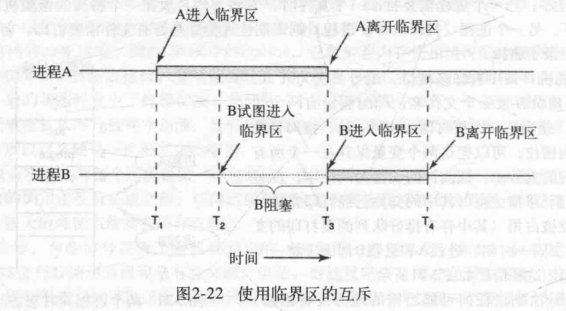
忙等待的互斥--Mutual Exclusion Solution
mutux:互斥量
实现互斥的几种方案
屏蔽中断--Disabling Interrupts
- 使每个进程在刚刚进入临界区后立即屏蔽所有中断,并在就要离开之前再打开中断
- 屏蔽中断后,时钟中断也被屏蔽
- CPU只有发生时钟中断或其他中断后才会进行进程切换,屏蔽中断后,CPU将不会被切换到其他进程
- 缺点
- 一个线程可能一直不会打开中断
- 多处理器系统中,屏蔽了一个CPU,其他CPU仍然能继续运行,可以访问共享内存
锁变量--Lock Variable
- 设置一个共享锁变量,其初始值为0
- 当一个进程想进入其临界区时,首先测试这把锁
- 当锁值为0,则该进程将其设置为1并进入临界区
- 当锁值为1,则进程等待直到其值变为0
- 疏漏
- 一个进程发现锁值为0,恰好将值设置为1之前,另一个进程被调度运行,将锁值变为1,当第一个进程再次运行,同样也将该锁设置为1,此时同时有两个进程进入临界区
严格轮换法--Strict Alternation
- 整形变量turn,初始值为0,用于记录哪个进程进入临界区,检查或更新共享内存
- 开始时,进程0检查turn,发现其值为0,进入临界区
- 进程1也发现其值为0,在一个等待循环中不断地测试turn,看其值何时变为1
连续测试一个变量直到某个值出现为止,称为忙等待(busy waiting)
浪费CPU时间。应避免
用于忙等待的锁,称为自旋锁(spin lock)
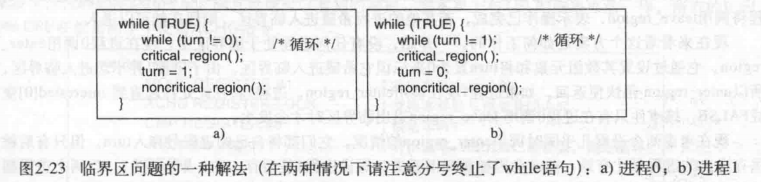
- 一个进程比另一个慢了许多的情况下,轮流进入临界区不是一个好办法
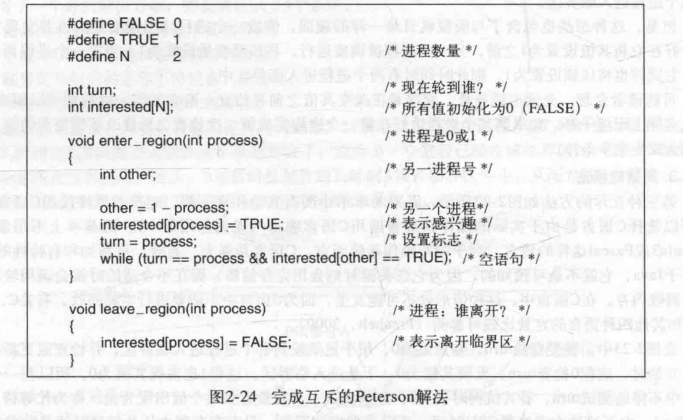
Peterson解法
- 将锁变量与警告变量的思想结合,提出一个不需要严格轮换的软件互斥算法
TSL指令
需要硬件支持
复制内存中的一个值(flag)到CPU的寄存器中,将这个值设为1
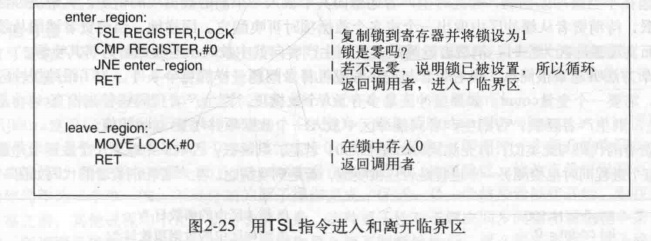
Mutual Exclusion with Busy Waiting
- Busy-Waiting: 执行代码的进程将处于紧密循环中,占用 CPU 周期,一遍又一遍地测试某些条件,直到它变成真的。
- 忙等待可能导致优先级倒置问题
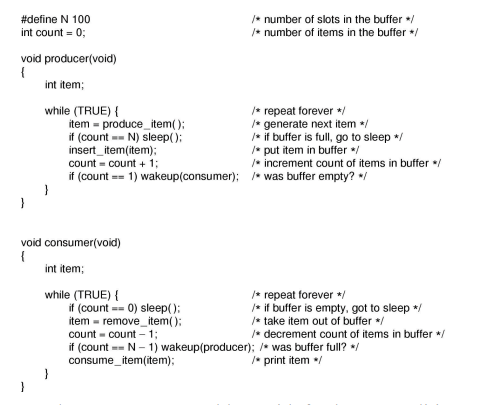
睡眠与唤醒
优先级反转问题--priority inversion problem,忙等待问题会导致这个问题

- 设置了两个参数:sleep、wakeup
- sleep:一个将引起调用进程阻塞的系统调用,即被挂起
- wakeup:有一个参数,指定要被唤醒的进程
Producer-Consumer Problem
生产者-消费者问题
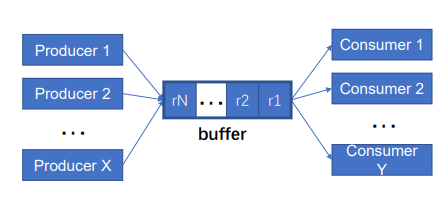
- 考虑一个可以容纳N个项目的循环缓冲区。
- 生产者将项目添加到缓冲区,消费者从缓冲区中删除项目
- 生产者消费者问题是限制对缓冲区的访问
Semaphores 信号量
首先要知道,信号量有两种
- 一种用于互斥,防止同时访问一些变量
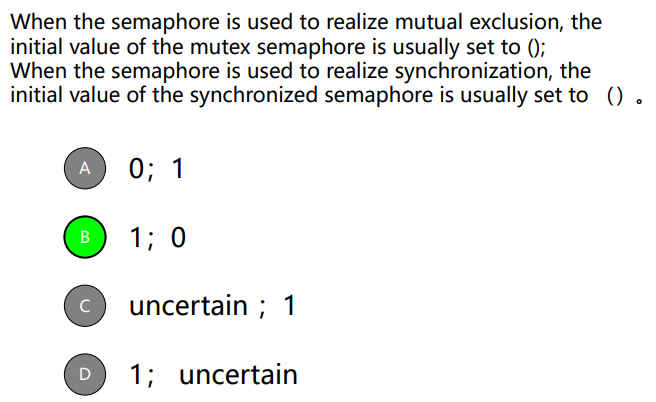
- 一般初始化为1,表示只有一个进程可以进入
- 一种用于同步,用于通知其他的进程。
- 一般初始化为0,有人释放,增加1,就可以被其他的进程检测知道
举一个简单例子:放水果给孩子吃,有两种水果:苹果和梨子,一次只能放一个
- 放水果这个行为限定了次数,因此用互斥的信号量,防止放多个
- 孩子吃到水果,则使用同步的信号量,我放了一个苹果,通知他可以吃了
信号量是一种结构,包含两个部分
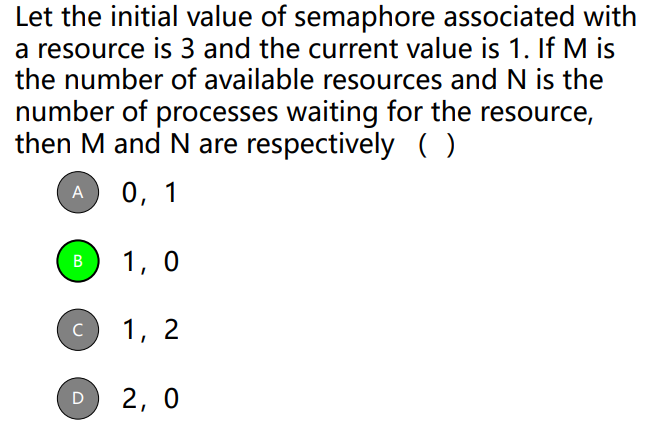
- COUNT,一个用于计数的整数
- Q,阻塞的进程的pid的队列
1 | struct sem_struct { |
信号量的操作
- UP
- DOWN
这些操作必须原子性地执行(即互斥)。
假设P是进行系统调用的进程,操作定义为
1 | DOWN(S): |
Semaphores do not require busy-waiting, instead they involve BLOCKING
1 | semaphore mutex = 1; // set mutex.count = 1 |
Mutexes 互斥量
A mutex is a semaphore that can be in one of two states: unlocked (0) or locked (1)
- 互斥量是一种信号量,有两种状态:unlocked (0) (临界区可用)和 locked (1)
信号量解决生产者消费者问题
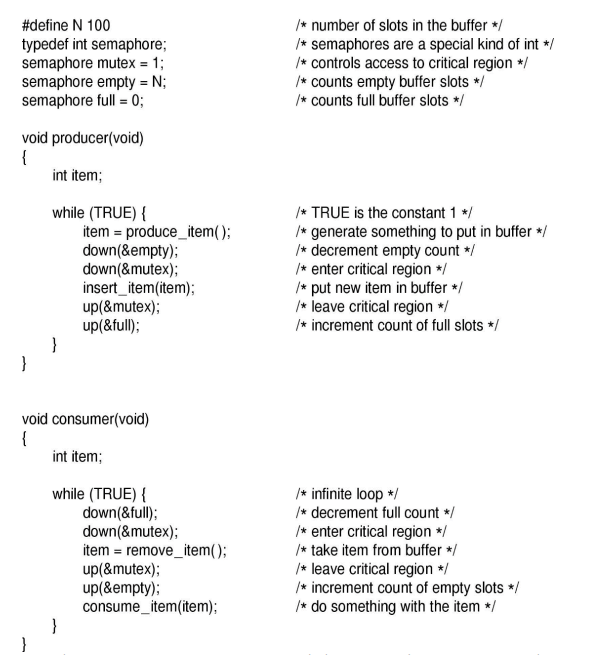
使用信号量
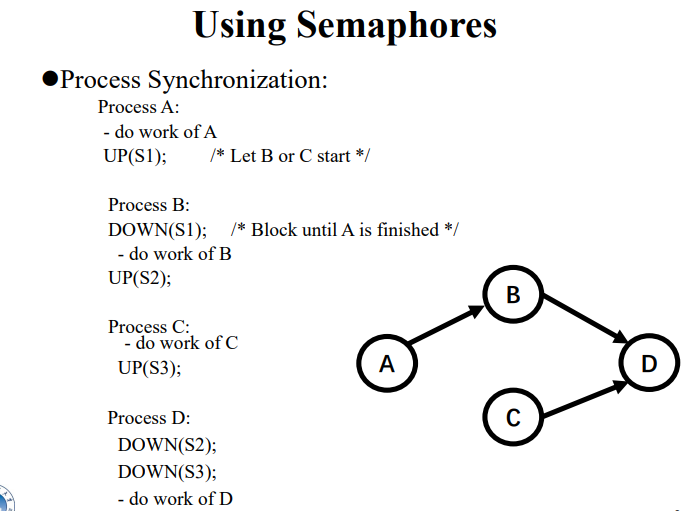
进程同步(Synchronization)
同步时的信号量初始化为0,当优先级高的进程执行完毕后,便会释放,即增加1。
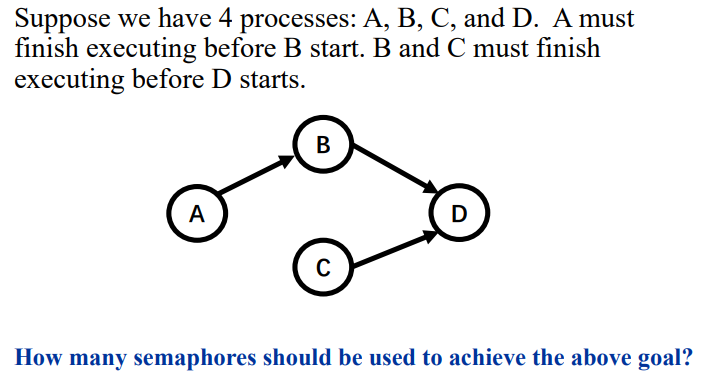
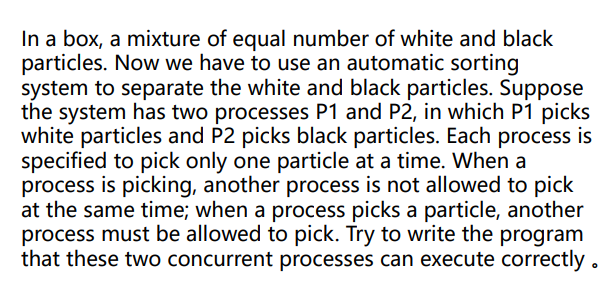
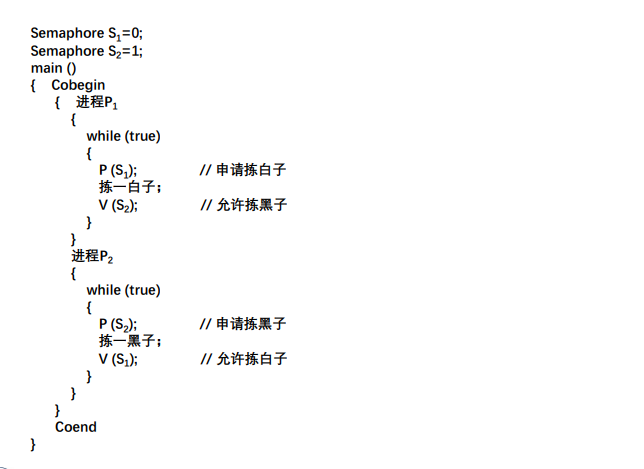
例题
Check Points
- What is Race Condition?
- What is Critical Region?
- What is Busy Waiting?
- What is Semaphore?
- What is Mutex
Solution
- Two or more processes access shared resourse and the final result depend on the order of the process
- The program that access the shared resourse
- The process is running the program over and over again until some condition become true, the CPU is keep running
- a process executing the entry code will sit in a tight loop using up CPU cycles, testing some condition over and over, until it becomes true
- A SEMAPHORE, S, is a structure consisting of two parts: (a) an integer counter, COUNT (b) a queue of pids of blocked processes, Q
- A kind of semaphore that has two status: locked and unlocked
本博客所有文章除特别声明外,均采用 CC BY-NC-SA 4.0 许可协议。转载请注明来自 Yeの博客!